Authentication Server
The Authenticator is the central authentication and authorization server for DroneEngage. It issues accounts, access codes, and session tokens, and it authenticates Communication Servers using Ed25519 server-to-server (S2S) cryptography.
What It Does
Registers users and generates Access Codes.
Authenticates WebClient logins and unit connections.
Manages registered Communication Servers.
Provides an admin web interface for users and servers.
Exposes a WebSocket S2S endpoint for server authentication.
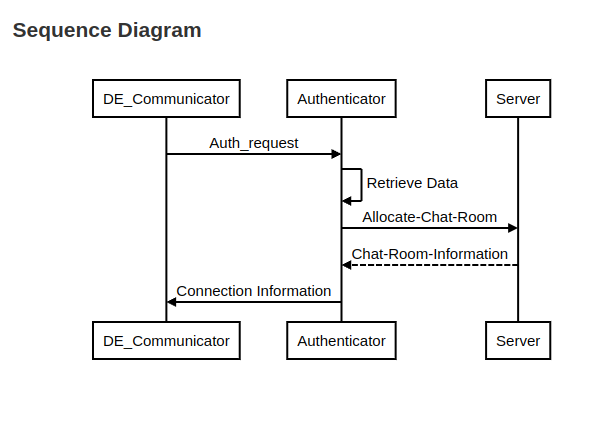
The authenticator does not perform an HTTP redirect. Instead, it returns a JSON response containing the communication server address, port, and a temporary login key. The client then uses these details to establish a WebSocket connection to the communication server.
The accounts can be stored in various formats such as MySQL database, JSON file or as a single account defined in the server.config file.
Components
The Authenticator runs three services simultaneously:
API Server (default port
19408) — REST API for login, register, agent routes.Views Server (default port
8089) — EJS-based admin web interface.S2S WebSocket Server (default port
19001) — Ed25519 challenge-response auth for servers.
Source Code: https://github.com/DroneEngage/droneegnage_authenticator
Settings
- Settings is defined in a file called server.config the most important fields are:
server_id: Defines name of the server.
server_ip: Defines ip that is the server is listening to. default:0.0.0.0
server_port: Defines the port that is the server is listening to. default:19408
account_storage_type: Can be [single,file,db]. single means a single constant account, file means a simple JSON file stores names and passwords. db means a separate mysql database.
single_account_user_name: e.g. “single@airgap.droneengage.com” which is a single account when account_storage_type is single
single_account_access_code: e.g. “test” which is the password when account_storage_type is single
db_users: e.g. “./db_users.db” which is the JSON file name of accounts when account_storage_type is file
s2s_ws_target_ip: The listinning ip that Authentication Server listens to waiting for a websocket connection from a Communication Server.
s2s_ws_target_port: This is the port for the same websocket connection between Authentication Server and Communication Server.
{
    "server_id"                 : "AndruavAuth", // server id
    "server_ip"                 : "0.0.0.0",
    "server_port"               : 19408,

    "account_storage_type"   : "single",  //[single,file,db]
    "single_account_user_name"  : "single@airgap.droneengage.com",
    "single_account_access_code": "test",
    "db_users"                  :"./db_users.db",


    "enableLog"                 : false,
    "log_directory"             : "./logs/",
    "log_timeZone"              : "GMT",
    "log_detailed"              : true,


    "s2s_ws_listening_ip"       : "127.0.0.1",
    "s2s_ws_listening_port"     : "19001",

    "enable_SSL"                : true,
    "ssl_key_file"              : "ssl/privkey.pem",
    "ssl_cert_file"             : "ssl/fullchain.pem",


}
Warning
Although above is a JSON file but you can add comments to the code using // and /* */ blocks.
DB_USERS File
When account_storage_type is file then field db_users is used to specify file path and name.
The file is a simple JSON format like in the following example:
{
    "user1@email.com": {
        "sid": 1,
        "pwd": "0001",
        "isadmin": true,
        "prm": "0xffffffff"
    },
    "user2@email.com": {
        "sid": 1,
        "pwd": "drone",
        "isadmin": true,
        "prm": "0xffffffff"
    },
    "user3@email.com": {
        "sid": 3,
        "pwd": "drone",
        "isadmin": true,
        "prm": "0xffffffff"
    },
}
user1 and user2 share the same drones, they are just to logins that can be used via webclient and DroneEngage Communicator. user3 is another user that is separated from then as he/she has a separate SID value.
Important
IP & port are defined in all DroneEngage-Communicator and Webclient because they need to connect to the server.
For Developers
Runtime: Node.js 18+.
Stack: Express, EJS, SQLite3, Helmet, CORS, CSRF, rate limiting.
Key files: -
server.js— spawns all three services. -auth_server/js_auth_server.js— main auth controller. -auth_server/js_account_manager.js— user CRUD. -auth_server/js_s2s_auth.js— Ed25519 S2S auth. -routes/js_router_admin.js— admin routes.Configuration:
server.config(JSON, supports--configoverride).Database: SQLite with migrations in
database/migrations/.
See Server Technicals for the authentication flow, database schema, and API details.